Prove Yourself at Your Own Risk: The Hidden Dangers Inside Online Identity Verification
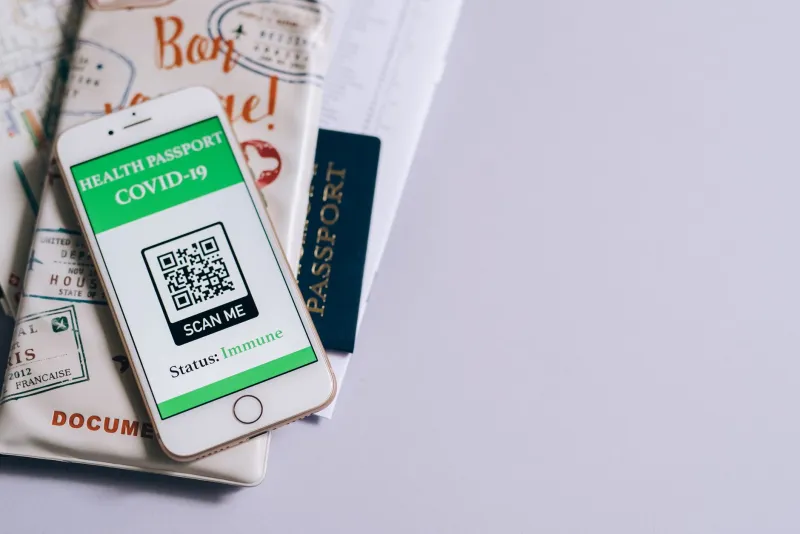
When a financial platform asks you to photograph your driver's license and take a selfie, the implicit promise is protection — verification that you are who you claim to be, and that nobody else can impersonate you. It is a reasonable premise. It is also increasingly a dangerous one.
Identity verification infrastructure, known in financial and regulatory contexts as Know-Your-Customer or KYC, was originally designed to combat money laundering, terrorism financing, and financial fraud. In the past decade, KYC requirements have expanded far beyond their original banking context. They now govern cryptocurrency exchanges, gig economy platforms, online lending services, and even some social media age-verification systems. The data these systems collect — photographs of government-issued IDs, facial geometry, home addresses, Social Security numbers — represents some of the most sensitive personal information that exists. And it is being collected at scale by entities whose security practices vary enormously.
What KYC Systems Actually Collect
The term "identity verification" encompasses a wide range of data-collection practices, and consumers are rarely given a complete accounting of what they are handing over. A typical KYC flow at a cryptocurrency exchange might capture the following: a front and back scan of a government-issued photo ID, a selfie photograph that is algorithmically compared to the ID image, a live "liveness check" that may capture a short video or require the user to blink or turn their head, and in some cases, a Social Security number or tax identification number for regulatory compliance.
This data does not simply verify your identity and disappear. It is stored — sometimes indefinitely, sometimes with third-party verification vendors, and sometimes in jurisdictions with privacy frameworks materially weaker than those governing the platform itself. Companies frequently outsource KYC processing to specialized vendors such as Jumio, Onfido, or IDology. When you verify your identity with a platform, you may be simultaneously consenting to data processing by a third-party vendor whose name does not appear in the platform's marketing materials.
When Verification Infrastructure Becomes a Target
The concentration of highly sensitive identity documents within KYC databases makes those databases extraordinarily attractive to criminal actors. In 2022, the identity verification vendor Jumio reported processing more than 500 million identity verifications. Databases of that scale — containing facial images and government ID scans — represent a persistent and high-value target.
The consequences of a KYC breach differ fundamentally from those of a conventional credential breach. A stolen password can be changed. A stolen facial scan cannot. A compromised email address can be abandoned. A photograph of your driver's license, combined with your facial geometry, creates the raw material for synthetic identity fraud that can persist for years.
Criminals who obtain KYC data can use it to open fraudulent financial accounts, file false tax returns, circumvent the very verification systems the data was meant to protect, and sell the information in underground markets where demand for verified identity packages — sometimes called "fullz" — remains consistently high.
In documented cases, threat actors have also exploited the KYC process itself rather than its stored outputs. Social engineering attacks targeting verification support staff — convincing a customer service agent that a legitimate account holder needs their verification status reset — have enabled account takeovers even without breaching the underlying database.
The Red Flags That Separate Legitimate Requests From Exploitation
Not every identity verification request is legitimate, and consumers should evaluate each request with deliberate skepticism.
Legitimate verification contexts include: opening a new bank or brokerage account, complying with a regulated cryptocurrency exchange's onboarding requirements, verifying age for a platform with a legal obligation to do so, and employment onboarding for identity-sensitive roles.
Red flags that warrant refusal or escalation include:
- A request for identity verification triggered by an inbound email, text message, or social media contact rather than initiated by the user during an account-opening flow.
- Platforms that request more information than their stated service requires. A ride-sharing app asking for a Social Security number, for instance, has no legitimate operational need for that data.
- Verification requests routed through third-party links rather than the platform's official application or website.
- Any entity that claims to need your ID to "restore" or "unlock" an existing account. Legitimate platforms have internal processes for account recovery that do not require re-uploading identity documents through unverified channels.
- Urgency framing. Phrases such as "your account will be suspended within 24 hours unless you verify" are a hallmark of social engineering rather than legitimate compliance operations.
The Security Trade-Off Nobody Explains Clearly
Consumers are rarely informed that identity verification involves a genuine security trade-off. Stronger verification — physical presence at a branch, notarized documents, hardware token authentication — provides more reliable identity assurance but is operationally impractical at internet scale. Weaker verification — selfies and ID photographs — is convenient but creates a data liability that grows with every breach and every year the data is retained.
Biometric verification carries a particular risk that warrants emphasis. Illinois' Biometric Information Privacy Act (BIPA) and similar statutes in Texas and Washington impose specific obligations on entities that collect biometric data, including facial geometry. BIPA has been the basis of significant class-action litigation against companies including Facebook (now Meta), Google, and TikTok. However, not all states have enacted comparable protections, and federal biometric privacy legislation remains pending.
When a platform offers the option between a biometric verification method and a non-biometric alternative — such as a video call with a human agent or a knowledge-based authentication questionnaire — the non-biometric method may be the more defensible choice from a long-term privacy standpoint, even if it requires more effort in the moment.
Practical Steps for Navigating Verification Requests
Given the risks, several practices can reduce exposure without opting out of digital financial life entirely.
Before submitting identity documents to any platform, review its privacy policy specifically for language about third-party data sharing and retention periods. If the policy does not specify a retention limit for biometric or identity document data, that absence is itself meaningful.
Request deletion of verification data once onboarding is complete. Many platforms are not transparent about this option, but consumer data deletion rights under the California Consumer Privacy Act (CCPA) and similar state laws may entitle you to request it.
Monitor your credit reports through AnnualCreditReport.com for accounts you did not open — a primary indicator that your identity documents have been used fraudulently. Consider placing a security freeze with Equifax, Experian, and TransUnion as a baseline precaution if you have recently submitted identity documents to any platform.
The verification systems designed to protect you carry their own risks. Approaching them with informed caution is not paranoia — it is proportionate to the stakes.