Every Lightbulb Is a Door: The Hidden Cyber Risks Living Inside Your Smart Home
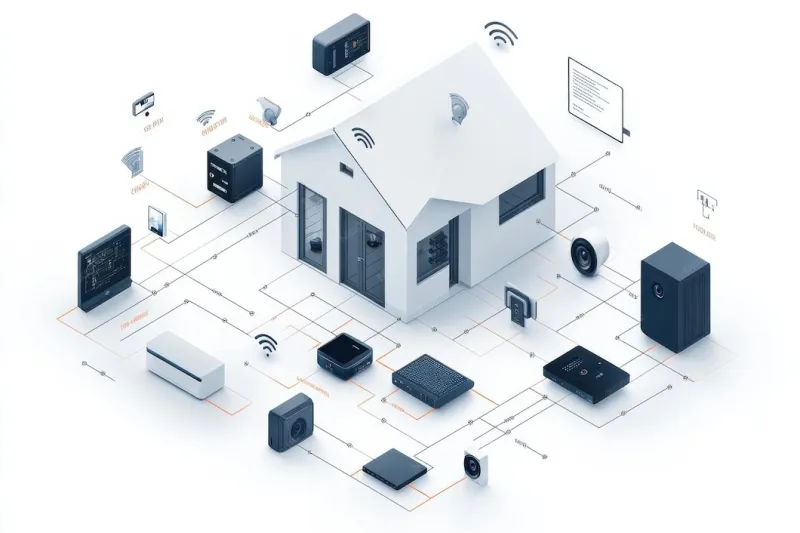
Photo: smart home devices router security network connected technology, via img.freepik.com
When a family in Houston installed a smart doorbell, a voice-activated thermostat, and a connected baby monitor over a single holiday weekend, they believed they were upgrading their home's convenience and safety. What they were also doing — unknowingly — was multiplying the number of doorways into their private network by a factor of three. Security researchers call this phenomenon attack surface expansion, and it is quietly unfolding inside tens of millions of American homes every year.
The global smart home market is projected to surpass $150 billion by 2030, driven by devices that promise frictionless living. Yet the cybersecurity architecture underpinning most of these products remains, in the bluntest terms, inadequate. Understanding why that is — and what you can realistically do about it — requires looking honestly at how the industry operates.
Why Manufacturers Build Convenience First and Security Second
The economics of consumer electronics create a structural incentive problem. A smart plug that ships with robust, automatically updating firmware, end-to-end encrypted communications, and mandatory multi-factor authentication costs more to develop and is slower to bring to market than one that does not. In a category where retail shelf space is fiercely competitive and consumers largely make purchasing decisions on price and star ratings, security features that are invisible to the naked eye rarely win sales.
The result is a marketplace flooded with devices running outdated operating systems, using weak or default credentials, and communicating over unencrypted channels. A 2023 analysis by cybersecurity firm Bitdefender found that smart TVs and network-attached storage devices were among the most commonly attacked categories in home networks — not because hackers find the devices themselves particularly valuable, but because compromising them provides a foothold from which to pivot toward more sensitive targets: a laptop containing tax documents, a smartphone linked to a banking application, or a NAS drive full of family photographs.
Default passwords remain one of the most persistent and embarrassing vulnerabilities in the ecosystem. Routers, cameras, and smart hubs frequently ship with credentials such as "admin/admin" or "user/1234" documented openly in product manuals. Many owners never change them.
Real Vulnerabilities in Popular Ecosystems
Consider the Amazon Ring ecosystem, which commands a dominant share of the residential video doorbell market. In 2019, Ring faced significant scrutiny after researchers demonstrated that the device's setup process transmitted Wi-Fi network credentials in an unencrypted format, briefly exposing them to anyone within wireless range. Ring patched the vulnerability, but the episode illustrated a broader truth: even well-resourced, brand-name manufacturers ship products with exploitable flaws.
Google's Nest line of thermostats and cameras has faced similar scrutiny. Security researchers have documented instances where insufficient session management allowed unauthorized parties to maintain access to device streams even after account passwords were changed — a particularly troubling finding for devices equipped with microphones and cameras.
Zigbee and Z-Wave, the wireless protocols underlying many smart lighting and sensor products from brands including Philips Hue and SmartThings, have their own documented weaknesses. Researchers at Check Point Software disclosed in 2020 that a vulnerability in the Zigbee protocol could allow an attacker within radio range to take control of a smart bulb, use it as a bridge to infect the home hub, and from there access the broader home network.
These are not hypothetical scenarios invented to generate alarm. They are documented, patched — and in many cases, only patched on devices whose owners actually applied the update.
The Network Segmentation Imperative
The single most effective architectural change a homeowner can make does not require technical expertise beyond a router's administration panel: network segmentation. Most modern routers — including those provided by major ISPs and consumer brands such as ASUS, Netgear, and TP-Link — support the creation of a separate guest network or VLAN (Virtual Local Area Network).
The principle is straightforward. Place all smart home devices — thermostats, cameras, voice assistants, smart plugs — on one isolated network. Keep computers, smartphones, and tablets on a separate, primary network. Even if a threat actor successfully compromises a smart lightbulb on the IoT network, they encounter a logical barrier before reaching the laptop where your tax returns and banking credentials reside.
To implement this on most home routers:
- Log into your router's administration interface (typically accessible at 192.168.1.1 or 192.168.0.1).
- Navigate to the wireless or network settings section.
- Enable the guest network feature and assign it a strong, unique password.
- Connect all IoT and smart home devices exclusively to this secondary network.
- Ensure the guest network is configured to prevent device-to-device communication (sometimes labeled "AP isolation" or "client isolation").
Firmware Updates: The Security Habit Most Households Skip
Firmware is the low-level software embedded in hardware devices, and it is the primary mechanism through which manufacturers deliver security patches. Unlike smartphone apps, which update automatically by default, smart home device firmware frequently requires manual intervention — or, at minimum, a deliberate opt-in to automatic updates.
Audit every connected device in your home. For each one, locate the firmware update section within the companion application or the device's web interface. Enable automatic updates wherever the option exists. For devices that do not support automatic updates, set a quarterly calendar reminder to check for new firmware manually.
Devices that have reached end-of-life status — meaning the manufacturer has ceased releasing security patches — should be treated as compromised by default and replaced or isolated from sensitive network segments.
Auditing Device Permissions and Data Flows
Many smart home applications request permissions that bear no logical relationship to their stated function. A smart plug application that requests access to your contact list, microphone, or precise location data is collecting information it does not need to perform its core purpose. Review the permissions granted to every smart home companion app on your smartphone and revoke anything that is not operationally necessary.
Additionally, review which devices in your home are configured to communicate with external cloud servers and under what terms. Many manufacturers' privacy policies permit the sale of usage data to third parties. If a device's cloud dependency is not essential to your use case, consider whether a locally controlled alternative — one that operates entirely within your home network without phoning home to a vendor's servers — might better serve your privacy interests.
A Smarter Approach to a Connected Home
None of this is an argument against smart home technology. Connected devices offer genuine utility, accessibility benefits, and, when properly secured, can even enhance home safety. The argument is for informed adoption: purchasing from manufacturers with demonstrated security track records, applying updates consistently, segmenting networks deliberately, and treating every new device as a potential liability until it has been properly configured.
The smart home industry is gradually improving under pressure from researchers, journalists, and emerging regulatory frameworks — including the FCC's U.S. Cyber Trust Mark program, which aims to establish a voluntary labeling standard for IoT device security. But the pace of improvement has not kept stride with the pace of adoption.
Until it does, the responsibility for defending the connected home falls largely on the homeowner. The good news is that the most impactful defensive measures require no specialized knowledge — only awareness, a few hours of configuration, and the discipline to maintain good habits over time.