Permanent Records: Why Stolen Biometric Data Is the Identity Theft Crisis No One Is Talking About
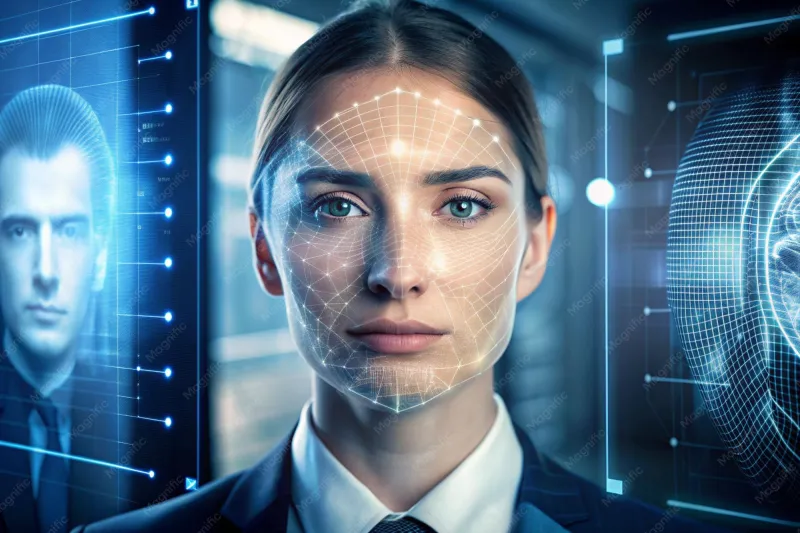
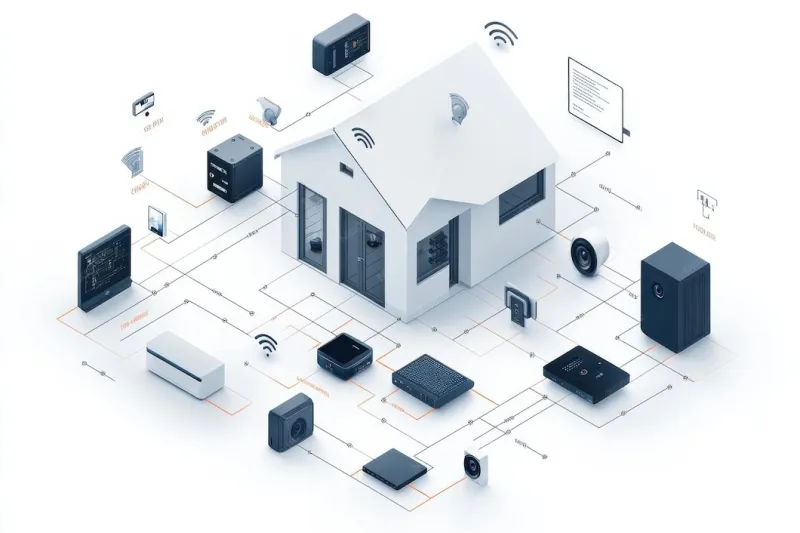
Photo: biometric fingerprint facial recognition data security privacy technology, via img.freepik.com
For the past two decades, the standard advice following a data breach has followed a familiar script: change your password, monitor your credit report, consider a fraud alert, and wait for the storm to pass. That script was written for a world in which the most sensitive identifier a person possessed was a nine-digit Social Security number — a number that, while damaging when exposed, could at least be flagged, frozen, and worked around.
That world is ending. In its place is emerging one in which the most sensitive identifiers attached to your identity are not numbers at all. They are your face, your fingerprints, the geometry of your iris, and the cadence of your voice. And unlike every other credential in your security portfolio, these cannot be changed.
What Biometric Data Actually Is — and Why It Is Everywhere Now
Biometrics refers broadly to physiological and behavioral characteristics that can be measured and used to verify identity. The category includes fingerprints, facial recognition templates, iris and retinal scans, voice patterns, and even more novel identifiers such as gait analysis and vein mapping.
For most of American history, biometric collection was largely the domain of federal law enforcement. That began to change meaningfully in the 2010s. Apple introduced Touch ID in 2013, normalizing fingerprint authentication for consumer devices. Face ID followed in 2017. Meanwhile, employers began deploying fingerprint-based time-and-attendance systems. Airports adopted facial recognition boarding systems under the TSA's Secure Flight program. Retailers quietly installed facial recognition in stores. Gig economy platforms began requiring facial verification for driver onboarding. Banks integrated voice authentication for call center access.
The result is that by the early 2020s, tens of millions of Americans had deposited their biometric data with a sprawling, loosely regulated ecosystem of private companies and government agencies — most of whom the individuals involved could not name if asked.
The Breaches You Probably Never Heard Of
In 2019, a security researcher discovered that Suprema — a South Korean company whose BioStar 2 platform manages biometric access control for facilities across the United States and globally, including banks, defense contractors, and police departments — had left a database of approximately 28 million records exposed and unencrypted on the public internet. The exposed data included fingerprint records, facial recognition data, and unencrypted usernames and passwords.
Also in 2019, U.S. Customs and Border Protection acknowledged that a subcontractor had transferred traveler photographs and license plate images to its own network without authorization, where they were subsequently exposed in a breach. CBP collects facial recognition data from millions of travelers annually through its biometric entry-exit system.
Clearview AI, the facial recognition company that built a database of more than 30 billion images scraped from social media and public websites, suffered a breach in 2020 in which its client list was accessed by an unauthorized party. Though the facial imagery itself was not reported stolen in that incident, the episode underscored the systemic fragility of organizations aggregating biometric data at scale.
These incidents represent a fraction of documented cases. The pattern they reveal is consistent: organizations collecting biometric data at enormous scale are applying data security practices that are inconsistent, frequently inadequate, and subject to minimal federal oversight.
The Legal Vacuum Surrounding Biometric Privacy
The United States has no comprehensive federal biometric privacy law. The gap is significant and consequential.
Illinois remains the gold standard at the state level, having enacted the Biometric Information Privacy Act (BIPA) in 2008. BIPA requires companies to obtain written consent before collecting biometric data, prohibits its sale, and mandates defined retention schedules. Texas and Washington have passed similar — though somewhat weaker — statutes. A small number of other states have enacted narrower protections.
For the majority of Americans, however, the legal protections governing how private companies collect, store, share, and secure their biometric information are thin to nonexistent. A company in a state without biometric privacy legislation can collect your facial recognition template, store it insecurely, sell it to a data broker, and face no specific regulatory consequence if it is subsequently stolen.
The Federal Trade Commission has pursued enforcement actions against companies for deceptive practices related to biometric data, and HIPAA provides some protections for biometric data collected in healthcare contexts. But these frameworks were not designed with biometric-specific risks in mind, and they leave substantial gaps.
How Stolen Biometrics Are Already Being Exploited
The fraud applications for stolen biometric data are not theoretical. They are active and evolving.
Facial recognition templates, when stolen in raw form, can potentially be used to spoof facial authentication systems — particularly older or less sophisticated implementations that rely on two-dimensional matching rather than liveness detection. Researchers have demonstrated the ability to reconstruct approximations of fingerprints from partial data, a technique that could undermine fingerprint-based authentication on consumer devices and enterprise access systems alike.
Perhaps more immediately, stolen biometric data is being combined with other compromised personal information to defeat identity verification systems used by financial institutions, government benefit programs, and telecommunications providers. The Social Security Administration, the IRS, and various state unemployment agencies have all faced fraud waves in which attackers armed with comprehensive personal data profiles — including, in some suspected cases, biometric components — successfully impersonated legitimate claimants.
AI-generated synthetic media adds another dimension. Voice cloning tools, now widely accessible, can produce convincing audio impersonations from relatively small samples of a target's voice. Facial deepfake technology is advancing at a pace that increasingly challenges the liveness detection systems financial institutions deploy to verify customer identity during remote account opening.
Traditional credit monitoring services — the standard remediation product offered following conventional data breaches — are entirely blind to these vectors. A credit freeze cannot prevent someone from using your voice pattern to bypass a bank's telephone authentication system.
What Individuals Can Do in the Absence of Comprehensive Protections
The uncomfortable reality is that individuals have limited direct control over biometric data that has already been collected. The more actionable strategies focus on limiting future exposure and hardening adjacent systems.
Minimize voluntary biometric enrollment. Evaluate each request to enroll biometrics critically. Many services that offer biometric authentication also support alternative verification methods. Where alternatives exist and the convenience trade-off is acceptable, consider them.
Scrutinize app permissions. Mobile applications frequently request camera and microphone access for purposes that extend beyond their core functionality. Audit these permissions in your device's privacy settings and revoke access for applications that do not have a clear operational need.
Monitor for synthetic identity fraud specifically. Request your credit reports regularly from all three major bureaus. Watch for accounts, inquiries, or addresses you do not recognize — these can be early indicators of synthetic identity fraud, which may incorporate stolen biometric components.
Engage with state-level legislative processes. Consumer advocacy organizations tracking biometric privacy legislation — including the Electronic Frontier Foundation and the ACLU — publish resources and action alerts related to state and federal legislative developments. Constituent engagement on these issues has historically influenced legislative outcomes.
Assume your data has been collected. Given the breadth of biometric collection by employers, government agencies, airports, and consumer platforms over the past decade, proceed on the assumption that some form of your biometric data resides in systems you did not explicitly authorize. This posture — uncomfortable as it is — leads to more realistic risk assessment and better defensive decision-making.
The Asymmetry at the Heart of the Problem
Every other credential in the modern identity security stack can be rotated. Passwords, PINs, account numbers, even Social Security numbers can be replaced or flagged in ways that limit ongoing damage. Biometrics cannot. The fingerprint you used to clock into work in 2017, the facial template your phone captured in 2019, the iris scan a federal system recorded in 2021 — those are permanent records, attached to you for life.
The institutions collecting this data have not, as a class, demonstrated that they are equipped to bear that responsibility. Until federal law catches up with the technology, the burden of vigilance falls disproportionately on individuals who were often never meaningfully informed that the data was being collected in the first place. That is not a sustainable arrangement — and it is one that the cybersecurity and policy communities are only beginning to reckon with seriously.