Frozen Assets: What to Do When Your Bank Shuts You Out Without Explanation
Photo: bank account frozen closed letter financial dispute, via wallpapers.com
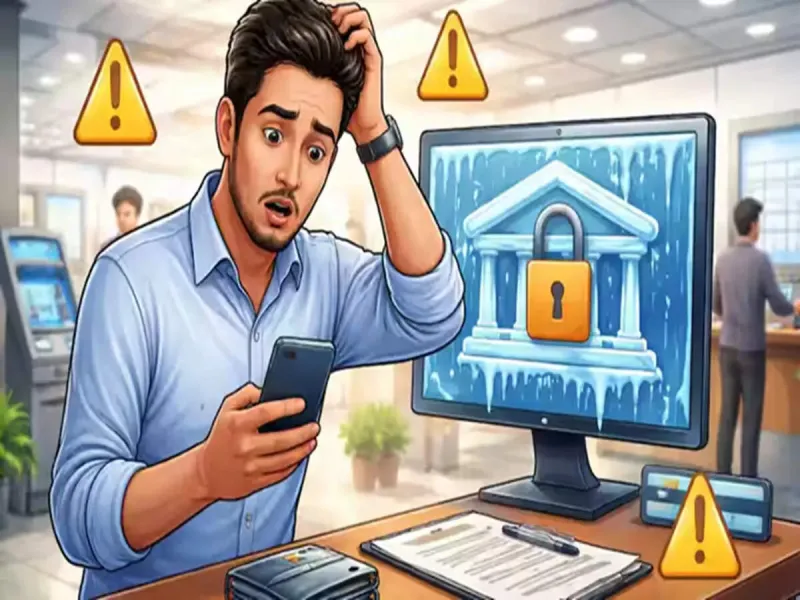
The letter arrives without preamble. Your account has been closed. Access to your funds is restricted pending review. No explanation is offered beyond a vague reference to the bank's right to terminate the relationship at its discretion. Your direct deposit is already scheduled. Your automatic bill payments are queued. And you have, at that moment, no access to your own money.
This scenario, once rare enough to seem exceptional, has become a recognizable pattern across the United States. Consumer advocacy organizations, legal aid clinics, and financial regulators have all documented a sharp increase in what the industry terms "de-risking" — the mass closure of customer accounts by financial institutions attempting to minimize their exposure to regulatory scrutiny. The collateral damage falls almost entirely on the customers.
The Compliance Engine Behind Sudden Closures
To understand why banks close accounts without warning, you need to understand the regulatory environment in which they operate. The Bank Secrecy Act and its associated anti-money-laundering regulations require financial institutions to monitor customer transactions and file Suspicious Activity Reports with the Financial Crimes Enforcement Network when they detect patterns consistent with financial crime. Failure to maintain adequate compliance programs carries severe penalties — fines that have reached the billions of dollars for major institutions.
In response, banks have deployed automated transaction monitoring systems that analyze account activity against behavioral models calibrated to flag anomalies. These systems are, by design, conservative. A false negative — missing genuine money laundering — carries regulatory consequence. A false positive — flagging a legitimate customer — carries, in the bank's calculus, almost none.
The result is a compliance apparatus that closes accounts based on pattern matches rather than human investigation. Transactions that deviate from a customer's established baseline, deposits that arrive in irregular amounts, or account activity that superficially resembles patterns associated with structuring or fraud can trigger automated closure workflows without a human reviewer ever examining the specific facts. Customers are frequently not informed of the specific trigger, because banks are legally prohibited from disclosing the existence of a Suspicious Activity Report — a provision known as the "tipping-off" prohibition.
Who Is Most Vulnerable
While any account holder can be caught in these automated systems, certain populations face disproportionate exposure. Small business owners who handle significant cash volume, gig-economy workers whose income arrives in irregular deposits, immigrants who send or receive international remittances, and cannabis-adjacent businesses operating in states where the industry is legal but federally unrecognized are among the most frequently affected.
Data errors compound the problem. Inaccurate entries in consumer financial databases — particularly ChexSystems and Early Warning Services, the two primary reporting agencies used by banks to screen new customers — can trigger closures based on records that belong to a different individual or reflect disputes that were resolved years ago. Unlike credit reports, which most consumers know to monitor, these banking databases are far less visible and far less frequently reviewed.
The Real Consequences
The downstream effects of an unexpected account closure extend well beyond inconvenience. Automatic payments fail, triggering late fees and potential damage to credit scores. Employers may be unable to redirect direct deposits on short notice, leaving workers without timely access to wages. In the most severe cases, consumers discover that ChexSystems records the closure as negative information, making it difficult or impossible to open a replacement account at another institution — a condition sometimes described as being "banked out."
For individuals who depend on their account for housing payments, utilities, or medication costs, even a two-week interruption can cascade into a genuine financial crisis.
Your Legal Protections — and Their Limits
Federal law gives banks broad authority to close consumer accounts at will. There is no general right to maintain a banking relationship, and institutions are not required to provide a reason for termination. However, several important protections do apply.
The Equal Credit Opportunity Act and the Fair Housing Act prohibit account closures motivated by race, national origin, religion, sex, marital status, age, or receipt of public assistance. If you have reason to believe discrimination played a role, this is a meaningful legal avenue. The Fair Credit Reporting Act governs the accuracy of information in ChexSystems and Early Warning Services reports; you have the right to dispute inaccurate entries, and consumer reporting agencies are required to investigate within 30 days.
Some states impose additional requirements. California, for example, requires banks to provide advance notice before closing certain accounts. The Consumer Financial Protection Bureau, while not able to compel a bank to reopen your account, can receive and escalate complaints — and a documented pattern of CFPB complaints against an institution carries weight in regulatory examinations.
A Step-by-Step Response Plan
Step one: Secure your funds immediately. Contact the bank to determine when and how your remaining balance will be released. Federal Regulation E requires that funds in a closed account be returned to the customer promptly, typically within a reasonable period that courts have interpreted as days to weeks, not months. Request a specific timeline in writing.
Step two: Document everything. Preserve all correspondence, including the closure notice, any prior communications with the bank, and records of your account activity for the preceding 12 months. This documentation is essential for any appeal or regulatory complaint.
Step three: Request your ChexSystems and Early Warning Services reports. Both agencies are required under the Fair Credit Reporting Act to provide you with a free report annually. Review each entry carefully for inaccuracies. If you identify errors, submit a written dispute with supporting documentation. Request confirmation of the dispute in writing.
Step four: File complaints with regulators. Submit a complaint to the CFPB at consumerfinance.gov/complaint. Identify the bank's primary federal regulator — the OCC for national banks, the FDIC for state-chartered non-member banks, the Federal Reserve for state-chartered member banks — and file a parallel complaint with that agency. Your state's banking regulator and state attorney general's office are additional escalation points.
Step five: Consult a consumer protection attorney. If the closure caused demonstrable financial harm, or if you believe discrimination was a factor, an attorney specializing in consumer financial law can assess whether you have grounds for a legal claim. Many offer free initial consultations, and some cases are taken on contingency.
Step six: Establish a replacement account. Credit unions, which are member-owned and often subject to different risk tolerance thresholds than large commercial banks, may be willing to accept customers with negative ChexSystems records. The FDIC's BankFind tool can help identify federally insured institutions in your area. Second-chance checking accounts, offered by a number of institutions specifically for customers with prior banking difficulties, are another option while disputes are pending.
Preventing the Problem Before It Starts
Proactive account hygiene reduces the probability of triggering automated compliance flags. Avoid structuring deposits in patterns — multiple deposits just below round-number thresholds, for example — that resemble known money-laundering typologies, even when your activity is entirely legitimate. Maintain consistent contact information across your accounts. If your financial activity is likely to change significantly — a new business, a large inheritance, a period of freelance income — consider notifying your bank in advance. Some institutions offer a brief explanation to customers who proactively communicate context for unusual activity.
Being locked out of your own bank account is a disorienting and frightening experience. But it is not, in most cases, a final outcome. Understanding the systems involved, moving quickly, and escalating through the right channels transforms a seemingly arbitrary corporate decision into a dispute that can be challenged, documented, and, in many cases, reversed.