Every Transaction Tells a Story: The Hidden Surveillance Economy Behind Your Digital Payments
Cash has no memory. It cannot record where it was spent, at what time, or by whom. A twenty-dollar bill handed across a counter at a hardware store in rural Ohio leaves no data trail, generates no consumer profile, and contributes nothing to the vast commercial intelligence apparatus that now underlies the American retail economy. That anonymity, once taken for granted, is becoming a relic.
The United States is not yet a fully cashless society, but the trajectory is unmistakable. Federal Reserve data shows that cash accounted for just 18 percent of all U.S. payments in 2022, down from 26 percent in 2019. Credit cards, debit cards, mobile wallets, peer-to-peer payment apps, and buy-now-pay-later platforms have absorbed the difference. Each of these alternatives carries a hidden cost that never appears on a receipt: the permanent, granular documentation of your financial life.
The Anatomy of a Cashless Transaction
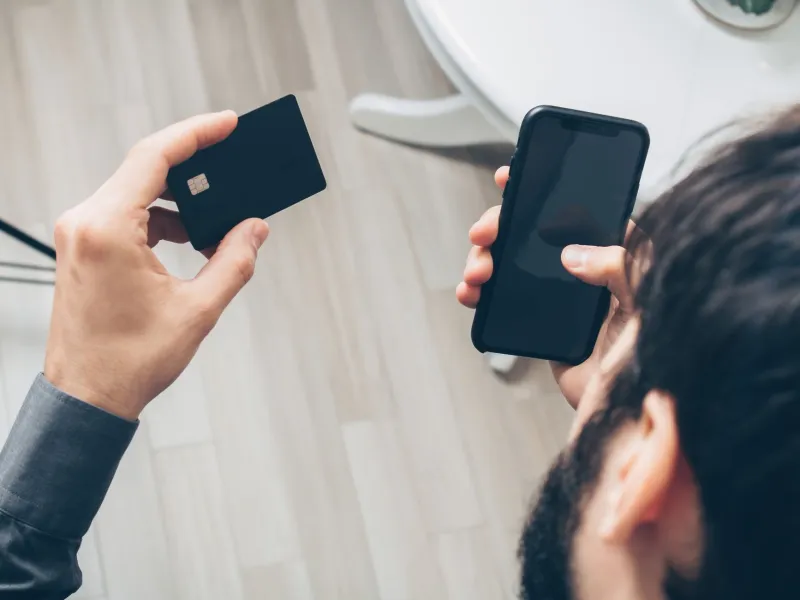
When an American consumer taps their phone to pay for groceries, the resulting data event is considerably more complex than it appears. The transaction passes through a payment processor — companies like Visa, Mastercard, or a proprietary network — which records the merchant category, the timestamp, the dollar amount, and a device or card identifier. The card-issuing bank receives its own copy. The merchant's point-of-sale system logs the transaction internally. If a loyalty program is linked, that system captures the purchase as well.
At each node in this chain, the data may be retained, analyzed, and in many cases shared with or sold to third parties. Payment processors explicitly reserve the right in their terms of service to use aggregated and, in some formulations, individual transaction data for analytics and marketing purposes. Visa's "Visa Analytics Platform," for instance, is a commercial product sold to financial institutions and retailers that derives insights from transaction patterns across the network's global user base.
The result is a financial dossier of remarkable specificity. Over time, your transaction record reveals your approximate income bracket, your health concerns (inferred from pharmacy and medical provider purchases), your political leanings (derived from donation and subscription patterns), your relationship status, your dietary habits, your travel patterns, and your recreational interests — all without you ever voluntarily disclosing a single piece of that information.
Buy Now, Pay Later: A New Surveillance Layer
The rapid growth of buy-now-pay-later (BNPL) services — Affirm, Afterpay, Klarna, and their competitors — has introduced a new dimension of financial data collection that operates largely outside the traditional credit-reporting framework and its associated consumer protections.
BNPL platforms collect purchase data at a granular level, often including specific product information rather than simply merchant category. When a consumer finances a medical device, a fertility treatment supplement, or a mental health app subscription through a BNPL service, that information may be retained in a proprietary database not subject to the Fair Credit Reporting Act's accuracy and dispute requirements.
The Consumer Financial Protection Bureau issued a report in 2023 raising concerns about BNPL data practices, noting that these platforms "may use data collected from loan transactions to target consumers with additional financial products." Several BNPL providers have partnerships with data analytics firms that use purchase histories to build creditworthiness models and behavioral profiles — a practice that regulators have flagged but not yet comprehensively restricted.
Government Access and Financial Surveillance
Private-sector data collection is only one dimension of the cashless surveillance equation. Government agencies have established legal pathways to access financial transaction records that are, in most circumstances, far less cumbersome than obtaining a search warrant for physical evidence.
Under the Bank Secrecy Act, U.S. financial institutions are required to file Suspicious Activity Reports and Currency Transaction Reports with the Financial Crimes Enforcement Network (FinCEN) for transactions that meet certain thresholds or patterns. These reports are not disclosed to the account holder. Law enforcement agencies can also obtain transaction records through administrative subpoenas in many circumstances, a lower legal bar than a traditional warrant.
The legal doctrine established in United States v. Miller (1976) holds that consumers have no Fourth Amendment privacy expectation in financial records voluntarily shared with third parties — the so-called "third-party doctrine." This means that the transaction data you generate every time you use a card or digital wallet is, from a constitutional standpoint, already accessible to government investigators without the protections that would apply to your private communications or physical property.
Mobile Wallets: Convenience With Conditions
Apple Pay, Google Pay, and Samsung Pay are frequently marketed as more private than traditional cards because they use tokenization — replacing your actual card number with a surrogate identifier for each transaction. This is a genuine security improvement that reduces fraud risk. However, tokenization does not eliminate the underlying data collection.
Apple has been notably more restrictive than its competitors in limiting transaction data sharing, stating that it does not retain information about purchases made through Apple Pay. Google's data practices are considerably more expansive. Google Pay's privacy policy acknowledges that transaction data may be used to personalize ads and services across Google's broader product ecosystem — a disclosure that many users overlook when evaluating the privacy trade-offs of mobile payment adoption.
Practical Steps for Preserving Transaction Privacy
Complete financial anonymity is not achievable within a modern, legally compliant American financial life. However, meaningful privacy improvements are within reach for consumers willing to make deliberate choices.
Use cash for sensitive purchases. Pharmacy purchases, mental health-related services, political donations, and any transaction you would prefer not to have associated with your identity are strong candidates for cash payment. Despite its declining convenience, cash remains the only payment method that generates no electronic record.
Separate financial identities for sensitive subscriptions. A prepaid debit card, purchased with cash and not linked to your primary identity, can be used for subscriptions or services you prefer not to associate with your main financial profile. Be aware that some prepaid cards require registration for purchases above certain thresholds.
Audit loyalty program participation. Retailer loyalty programs are, at their core, data collection programs that offer discounts as compensation. Evaluate whether the savings justify the detailed purchase history you are providing. Many programs share data with third-party analytics firms.
Review your bank and card issuer's data-sharing policies. Most major U.S. banks allow customers to opt out of certain forms of data sharing with affiliated companies and non-affiliated third parties under the Gramm-Leach-Bliley Act. These opt-out rights are real but often buried in annual privacy notices that arrive without fanfare.
Approach BNPL services with caution. Before using a buy-now-pay-later platform, review its privacy policy specifically for language about data sharing with analytics partners. Treat BNPL data as potentially less protected than data held by traditional credit card issuers.
The Asymmetry of the Cashless Bargain
The convenience offered by digital payment systems is genuine and substantial. But convenience is not free. The price, in this case, is paid in personal data — a currency that, unlike the dollars in your account, cannot be recovered once spent. The entities that benefit from your transaction history — processors, retailers, data brokers, and in some circumstances government agencies — are rarely transparent about the full scope of what they collect or how long they retain it.
For American consumers navigating an increasingly cashless economy, the most important financial literacy skill may not be budgeting or investing. It may be understanding exactly what your payment method reveals about you — and to whom.