The Middleman Who Knows Everything: How Your ISP Profits From Your Private Browsing Life
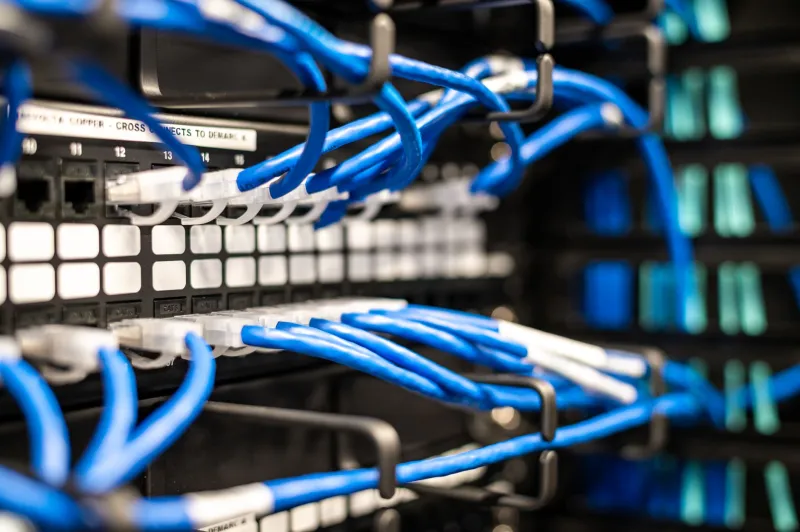
Before your data ever reaches Google or Facebook, it passes through a company most Americans rarely think about: their internet service provider. Unlike the social media giants that face mounting regulatory scrutiny, ISPs operate in a quieter corner of the surveillance economy — one where the rules are looser, the data is richer, and the average consumer has almost no idea what is being collected or sold.
Your ISP is not merely a pipe that delivers the internet to your home. It is, structurally speaking, the most privileged observer of your digital life. Every DNS request, every unencrypted connection, every pattern of usage flows through infrastructure your provider owns and operates. That vantage point has a market value — and a growing number of carriers have decided to collect on it.
What Your ISP Can Actually See
The scope of ISP visibility surprises most people when they fully understand it. Because all traffic originates from your home network and routes through your provider's systems before reaching any external server, your ISP occupies a position that no app, no social platform, and no advertiser can replicate.
At a minimum, ISPs can log every domain you visit — not necessarily the specific pages, but the destinations themselves. They can observe the timing and volume of your connections, infer application usage from traffic patterns, and in cases involving unencrypted HTTP traffic, read the content of those exchanges directly. Even with HTTPS encryption now standard across most major websites, the domain names remain visible through DNS queries unless the user has taken specific steps to obscure them.
Beyond technical access, ISPs also hold billing and identity data — your legal name, home address, payment history, and the devices registered to your account. When that information is combined with behavioral traffic data, the resulting profile is remarkably detailed. Researchers have demonstrated that browsing metadata alone can reveal health conditions, financial circumstances, political leanings, and relationship status, even without reading a single piece of actual content.
The Regulatory Gap That Made This Possible
In 2017, Congress voted to repeal broadband privacy rules that the Federal Communications Commission had established the previous year under the Obama administration. Those rules would have required ISPs to obtain explicit opt-in consent before selling sensitive customer data to third parties. Their repeal, signed into law by President Trump, effectively removed the federal framework that would have constrained carrier data practices.
What remains is a patchwork. The Federal Trade Commission has authority over ISPs as commercial entities, but its enforcement tools are limited compared to the sector-specific rules the FCC had proposed. State-level privacy laws, most notably California's Consumer Privacy Act, offer some protections for residents of those states — but no comprehensive federal standard currently governs what Comcast, AT&T, Verizon, or their peers may do with subscriber data.
The contrast with social media regulation is striking. Platforms like Meta face congressional hearings, FTC investigations, and sustained public pressure over their data practices. ISPs, by comparison, operate with far less visibility despite having access to data that is arguably more complete. The asymmetry is not accidental — it reflects decades of lobbying and a regulatory classification history that has made it difficult to apply uniform privacy standards across the digital ecosystem.
Who Buys This Data and Why
The buyers of ISP-derived data are varied. Advertising technology companies seek behavioral profiles to improve targeting precision. Data brokers aggregate and resell subscriber information to clients that may include insurers, employers, and financial institutions. Location data, which mobile carriers in particular have monetized extensively, has found its way to law enforcement agencies and commercial tracking firms alike.
Several major carriers have faced consequences for specific practices. T-Mobile, Verizon, and AT&T have all been fined by the FCC for selling customers' real-time location data to third-party aggregators without adequate consent controls. Those cases represent the enforcement ceiling under current law — notable penalties, but ones that critics argue are insufficient given the scale and duration of the practices involved.
The advertising data market is harder to trace. ISPs that operate advertising subsidiaries or partner with ad-tech firms can anonymize and segment subscriber data in ways that technically comply with privacy policies while still enabling granular behavioral targeting. The consumer who reads a carrier's privacy disclosure and concludes their data is protected may be drawing an overly optimistic conclusion.
What You Can Do — and What You Cannot
The honest answer is that no single countermeasure eliminates ISP visibility entirely, but several tools meaningfully reduce it.
Encrypted DNS is a practical first step. By default, DNS queries — the requests your device makes to translate domain names into IP addresses — are transmitted in plaintext and are fully visible to your ISP. Switching to a DNS-over-HTTPS or DNS-over-TLS resolver, such as those operated by Cloudflare (1.1.1.1) or Google (8.8.8.8), encrypts those queries and routes them to a third-party resolver rather than your carrier's servers. This removes one significant category of ISP visibility, though it does not address all traffic metadata.
A reputable VPN shifts the trust relationship rather than eliminating it. When properly configured, a VPN tunnels your traffic through an encrypted connection to a server operated by the VPN provider, preventing your ISP from seeing the content or destinations of your browsing. The limitation is significant: you are now trusting the VPN provider instead. Services that log user activity, share data with third parties, or operate under jurisdictions with weak privacy protections offer less protection than they advertise. Selecting a provider with independently audited no-log policies and a transparent corporate structure is essential.
The Tor network offers stronger anonymity for users with specific needs, routing traffic through multiple encrypted relays in a way that makes origin identification substantially more difficult. It comes with meaningful trade-offs in speed and usability, and it is not appropriate for all browsing contexts.
For most consumers, the combination of encrypted DNS and a carefully chosen VPN represents a reasonable and accessible baseline. Neither is a complete solution, but both reduce the surface area available to carrier data collection.
The Broader Picture
The ISP surveillance economy is not a secret, but it remains poorly understood by the public it affects. Americans who would be alarmed to learn that a neighbor was monitoring their web activity often have no idea that the company billing them for internet access is doing something functionally similar — and selling the results.
The regulatory landscape may shift. Privacy advocates continue to push for federal legislation that would apply consistent standards across the digital ecosystem, closing the gap that currently advantages carriers over platforms. Several bills have been introduced in Congress in recent years, though comprehensive federal privacy legislation has so far stalled.
Until that changes, the burden falls largely on individual consumers to understand what their ISP can see, what protections their state does or does not provide, and what technical measures are available to them. Awareness is not a substitute for policy — but it is a necessary starting point.